
Braintree Resident Lookup Sources
The right source depends on the question you bring. The Braintree Town Clerk publishes the annual Braintree Resident Street Listing Book. It is a dated town-census snapshot. For ownership, the Braintree Patriot assessor search gives the assessed owner and parcel facts. The Norfolk Registry ties named parties to recorded land instruments. MassCourts can index a civil case under a name. Braintree vital records document a life event when access rules allow. None of these alone proves current residence. Note the source date on everything. Match at least two independent details before treating two results as one person.
| Record | What it can confirm | Custodian | Access route |
|---|---|---|---|
| Braintree Resident Street Listing Book | A name listed at a Braintree street address in a census year | Braintree Town Clerk | Braintree annual printed book; ask about the needed year |
| Braintree assessor parcel | Assessed owner, situs, parcel and sale fields | Braintree Assessors | Free Braintree Patriot parcel search |
| Braintree recorded deed | A party’s recorded Braintree land interest | Norfolk Registry of Deeds | Braintree name and town index; free images are not official copies |
| Braintree civil docket | Indexed case party, dates, events and disposition | Massachusetts Trial Court | MassCourts for a Braintree-related docket, plus clerk or register |
| Braintree vital event | Qualifying birth, marriage or death event | Braintree Town Clerk or state records office | Braintree eligibility rules and certified-copy route apply |
| Braintree license or filing | A dated public credential or organization connection | Massachusetts agency | Braintree official status or filing search |
Use the street book or the assessor for name-and-address questions. Turn to a deed when the question is title rather than occupancy. Court and vital results demand more care. Same names are common, and some records stay restricted. The voter-status route is an individual check only. It is never a tool for building a neighborhood list.
Braintree Court Docket Checks
The public MassCourts docket search is one focused piece of a Braintree resident lookup. It indexes civil cases only. The last name needs at least two characters. A required capitalization pattern also applies. Court Department, Court Division, Court Location, and result count are chosen before a Braintree search. Common names create noise. Narrowing by location, case type, date window, or exact case number cuts the false matches. Norfolk Probate and Family, Norfolk Superior, and District Court matters can live in different department indexes. Save the department and location with each result.
| Search mode | Useful controls | Local reading rule |
|---|---|---|
| Name | Last name, first name or initial | Review every Braintree same-name result; it is civil-oriented. |
| Case number | Exact number, spacing and leading zeros | Keep the department and location for a Braintree-related matter because numbers can duplicate. |
| Case type | Begin date, end date and case type | The portal limits this search mode to one month, including a Braintree date check. |
| Ticket or citation | Exact number and court selectors | Use the department and location appropriate to the Braintree-related matter. |
The MassCourts docket search page displays its civil search form.
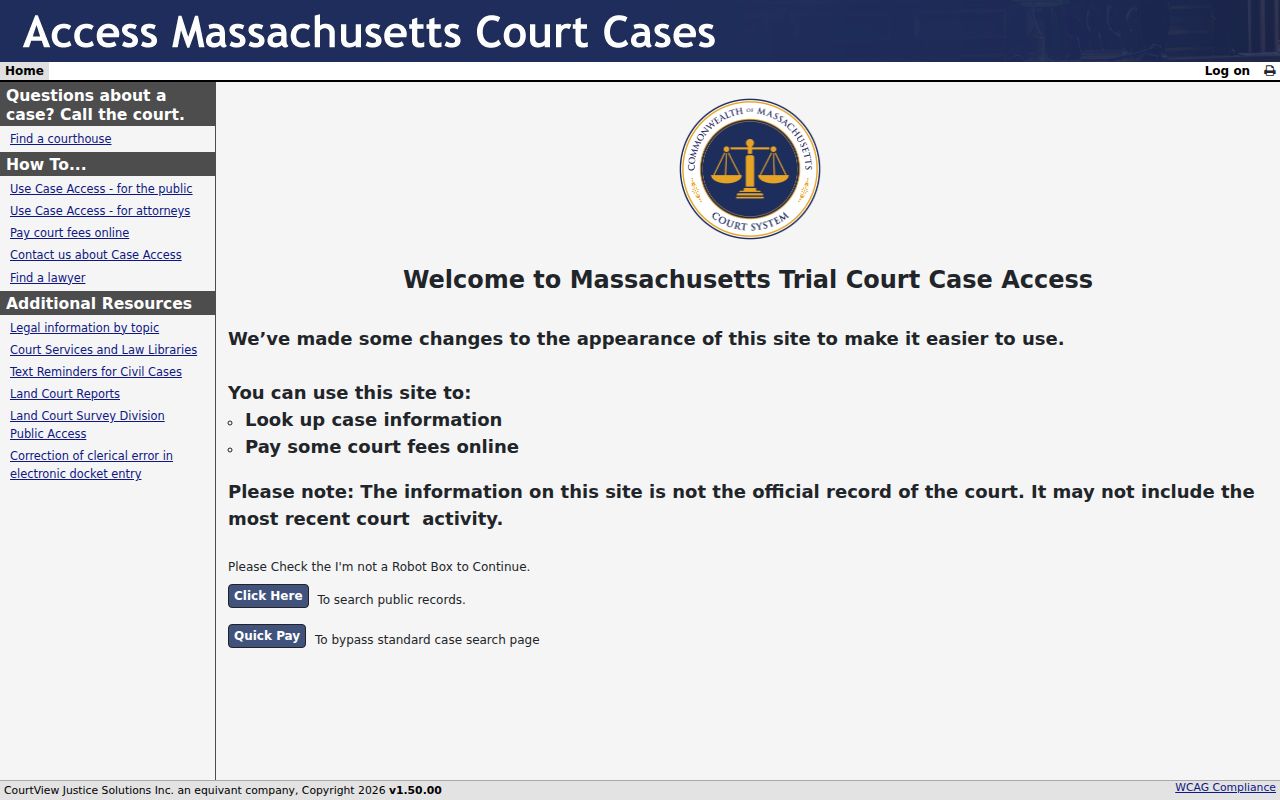
A docket hit can show a party role, case number, case type, department, dates, disposition, and a document-availability indicator. Documents may be missing. The complete official file may be missing too. Request a certified docket or document from the clerk or register when an important fact depends on it. A docket entry never shows guilt or liability.
Verify a Braintree Resident Match
Normalize the name first. Note initials, suffixes, spelling variants, a known street, and any dated relationship or public role. Then order each record to test the match. The Braintree assessor anchors a parcel, and the Registry connects a recorded party to it. Owner, mailing address, situs, and occupant stay separate labels. Historical names need more digging. A directory, newspaper, town report, cemetery entry, probate item, or event record may be required before the name becomes reliable.
- Define the narrow question: a past household, parcel owner, family event, public role, or court record.
- Record two identifying details beyond the surname, such as street and parcel, spouse and occupation, or date and document reference.
- Check the appropriate official index, preserving its date, agency, and any same-name uncertainty.
- Use a second independent record to test the match. If owner and occupant evidence conflict, retain both rather than choosing one.
- Ask the custodian for an official copy only when the record’s access rule allows it and the use requires it.
- Docket
- A court’s chronological case entry list, not the whole file and not a conclusion about a person.
- Index and image
- An index points to a record. An image is a view of the document, but an online image can still be marked nonofficial.
- Certified copy
- A copy supplied and authenticated by the agency that holds the record for a use that requires official custody.
Note: a result carrying only a common name and town should stay unresolved until a second independently sourced detail agrees. One detail is never enough.
Braintree Vital Record Routes
Vital records answer event questions, not continuous-residence questions. Braintree holds town records from 1640 to the present. A birth record may sit in Braintree when the parents lived there at the time. Marriage records follow filed intentions, and death records follow a Braintree death or Braintree residency at death. The Braintree Vital Records page offers online, mail, and in-person ordering. Local certified copies generally cost $12. Restricted classes require a legally eligible requester. The town request form is the direct mail route.
The Registry of Vital Records and Statistics serves as the state-level custodian with its own jurisdiction.
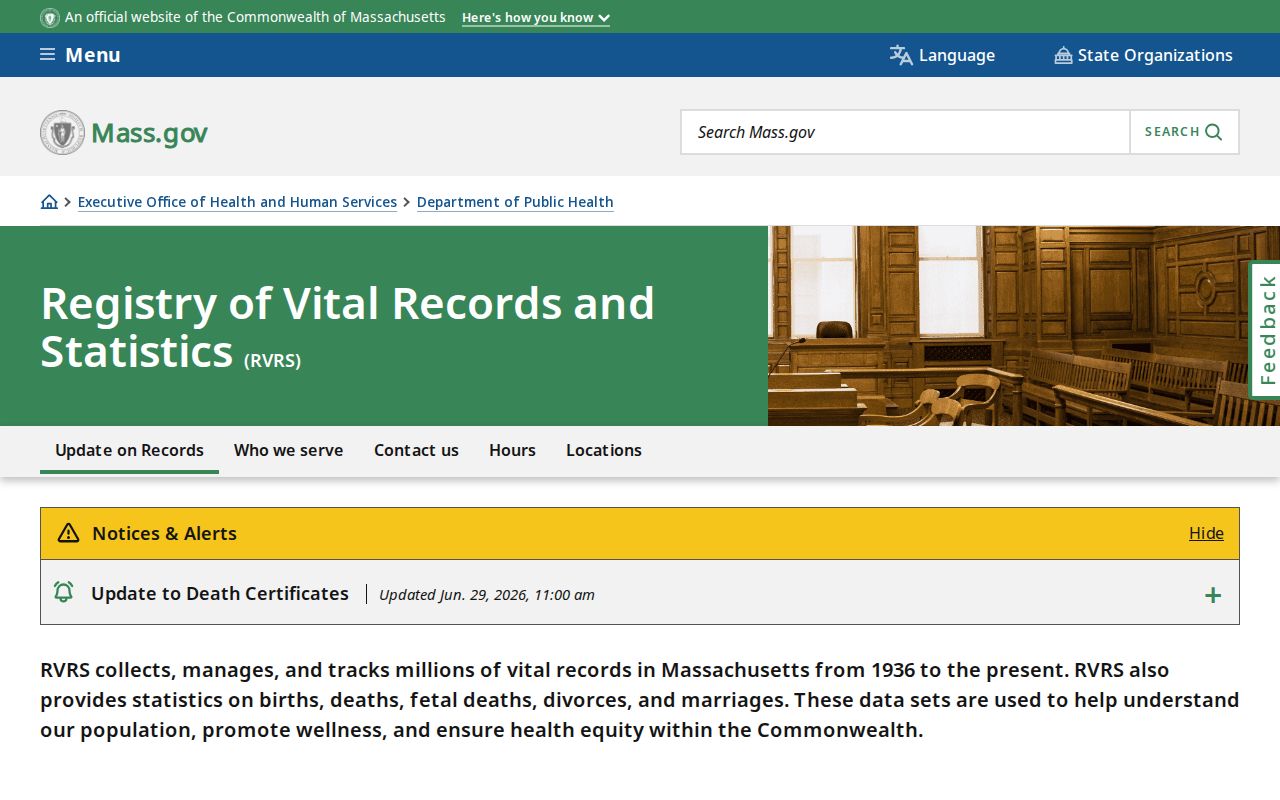
State research splits by era. The Massachusetts Archives holds material from 1841 through 1935. RVRS maintains 1936 to the present, while 1931–35 material also sits at the State Archives. The state research room is on site rather than a general public online index. Birth and marriage records older than 90 years, and death records older than 50 years, generally fall under the historical exception. Check the custodian's current rule before ordering.
Braintree Resident Lookup Certificates
Use the custodian's own ordering path whenever an event record is open to you. Skip unofficial copy sources. The Massachusetts certificate-ordering page is the official reference for state orders, which come online, by phone, by mail, and in person. Prices and timing differ by method. Those figures do not replace Braintree's local route. Restricted records can involve adoption, unmarried-parent, or death-record information, so identity and relationship documents may be needed. A July 2026 state change limits full Social Security number access in death records to a legitimate need. It is a privacy restriction, not a search feature.
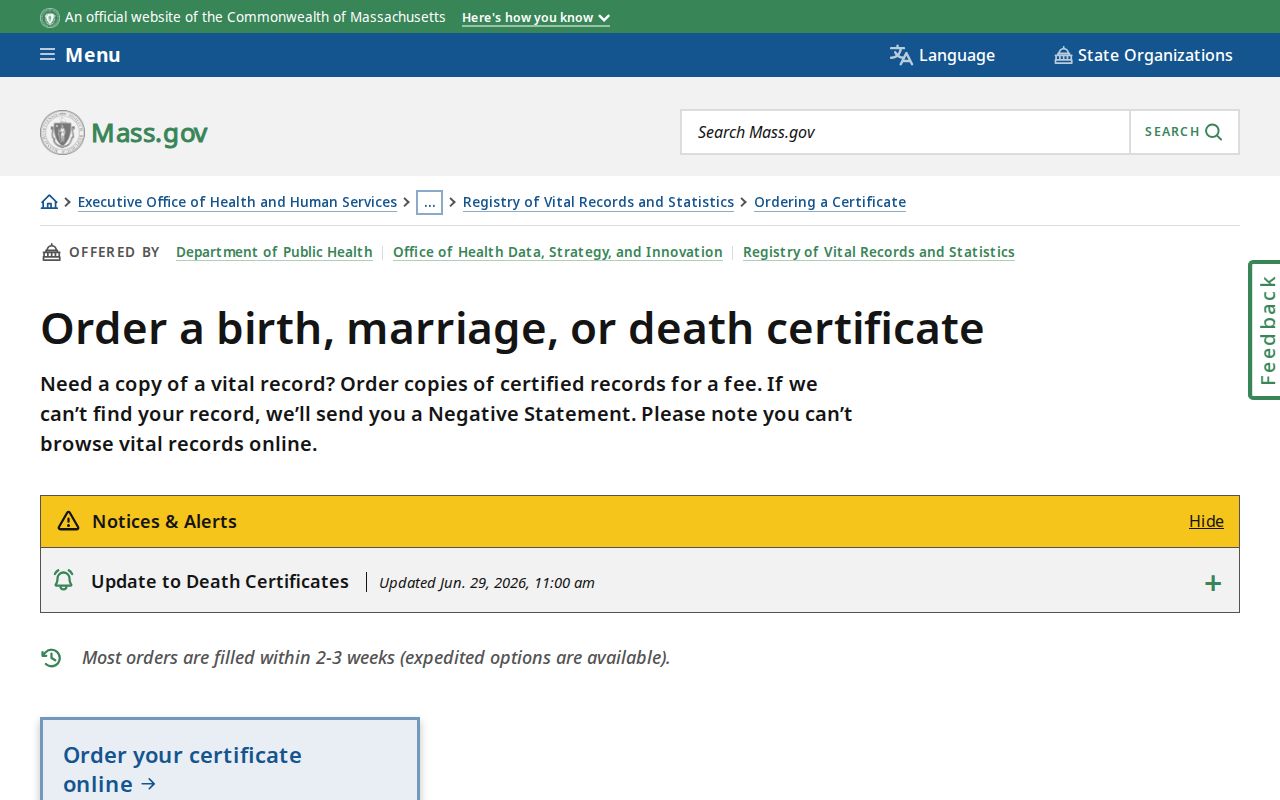
Pick a certificate method from the ordering channels shown. Then check the record category and any eligibility rule with the town or state custodian. Do this before you file. An event record proves a date, a relationship, or where something happened. It cannot tell you where a living person lives today.
Braintree Resident Lookup History
Older lookups in Braintree often start at Thayer Public Library’s genealogy resources. The collection is deep. Braintree newspapers reach back to 1881. Directories cover 1916–1935. Yearbooks run from 1935 to 2016. Town reports stretch from 1640 to 2006. Newspapers through 1966 are described as accessible remotely. Later local material through December 31, 2020 is available through the library. Town reports earn special attention for a documented public role or an older vital appendix. Still, pair them with a directory, cemetery, probate, or official vital source whenever a relationship or date is at stake.
The Braintree Historical Society offers a second local route. Its archive holds maps. It also holds town department files. Material on clubs, schools, churches, and noteworthy residents sits there too. An old street name or civic connection often surfaces there when a modern index fails. One reassurance: the 1911 Town Hall fire gutted the building, yet the cited Massachusetts Archives report says town records survived. That continuity matters. A researcher still has to locate the current repository holding any given record.
Braintree License and Filing Checks
Not every search is about a roof. Some document a public role instead. The Massachusetts eLIPSE license search works by individual or business, with controls for name, city, state, ZIP, board, license type, and license number. Treat city or ZIP as a geographic filter only. It does not prove the listed person lives at a Braintree address. The Secretary of the Commonwealth’s corporations search indexes entity and officer filings separately. Keep any filing connection as a dated organization fact. Do not turn it into a residence claim.
Braintree’s Town Clerk issues business certificates. Licensing matters route among the Town Clerk, licensing commissioners, Health Division, and Building Division. Braintree publishes no centralized public municipal roster. For a specific file, ask for the certificate, permit, or license by name, address, and date.
Braintree Resident Lookup Privacy
Massachusetts access rules put firm limits around a resident lookup. The Secretary’s voter status tool demands first name, last name, date of birth, residential ZIP, and an agreement checkbox. It is not a public street file. M.G.L. c. 51, § 47C restricts general release of central-registry name and address data. The Massachusetts Address Confidentiality Program gives qualifying survivors and specified protected-care providers a substitute address. An old listing never justifies republishing a safety-sensitive address.
Lawful use. Use Braintree records for personal, lawful research, family history, or an official self-service search. Do not use any result to stalk, harass, intimidate, or harm another person.
Braintree Resident Lookup Requests
A Braintree record missing from every online index sits in the office that created it. Go there. The Massachusetts Public Records Law governs the process. A request can go by letter, fax, email, or in person. No form is required. Name the department and the record type. Give the address or parcel, the date range, and your preferred format. Set a fee ceiling. Agencies generally respond within 10 business days. Even so, a request has limits. It cannot override a restricted vital record, a protected voter address, a sealed court item, or a confidentiality-program record.
Keep the agency’s response with your search notes. When an index falls short, the official fallback is usually a clerk, register, Town Clerk, library, archive, or records request. It is rarely another website.